By AP3K · English guide
Instagram Comment to DM Automation: The Practical Guide
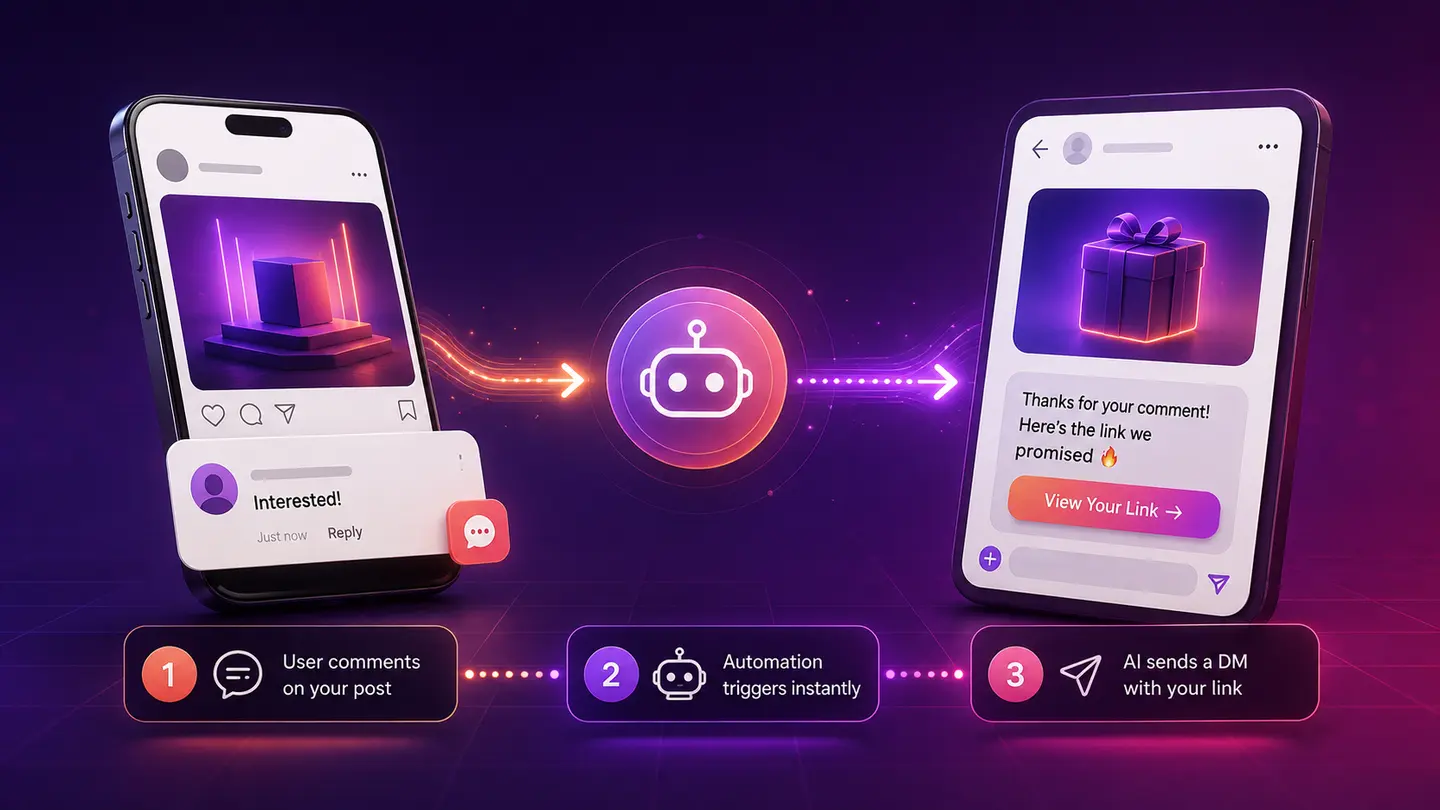
Instagram comment to DM automation connects a comment on your post or Reel to a configured private response. A person requests something, a trigger checks their comment, and the message delivers the next step. The useful outcome is a fulfilled request: a guide opened, an appointment booked, or a question answered. This guide helps you design that complete experience, then points to detailed instructions for each decision.
Can you run Instagram comment-to-DM automation for free?
Yes. AP3K's Free plan includes one connected Instagram account, up to five active automations, and 500 automated actions each month. A successfully sent public reply counts as one action, and a successfully sent DM counts as another. Failed or skipped actions do not count. Check the pricing page for current limits before planning your campaign.
For a simple flow with one DM and no public reply, 500 available actions can cover up to 500 successful DM sends. With one public reply plus one DM per commenter, the same allowance covers up to 250 complete two-action flows. These examples assume no other actions consume the allowance; they are capacity calculations, not promised delivery or conversion results.
Start with a saved message and one link. AI generation is a separate paid feature and is not needed to send the same requested resource to eligible commenters. Connect your Business or Creator account, choose a post and keyword, write the message, activate the automation, and test with a second account.
Start with a request you can fulfill
Write the promise before opening the builder. For example: Comment GUIDE and I will send the camera settings checklist. Prepare a working, mobile-friendly destination that actually contains that checklist. A vague promise such as learn my secret gives readers little reason to trust the link they receive.
Comment-triggered automation is different from messaging a scraped audience or sending a campaign to everyone who follows you. Build around the person's interaction and keep the response relevant to it. An automated action also does not guarantee that a recipient reads the message, opens the link, or purchases anything.
- Resource request: a checklist, PDF, template, or useful article.
- Buying question: product details, a menu, or a transparent pricing page.
- Next action: booking, event registration, or a demonstration request.
Choose scope, trigger, and actions separately
In AP3K, connect the Instagram Business or Creator account that owns the content and create a Comment automation. Select a particular post or Reel when the offer belongs to that content. Use Any post only when the same promise is valid across the account. Scope answers where the automation listens; the keyword answers which comments should qualify.
Use Specific keyword when the caption asks for a word such as GUIDE. Any comment makes sense only when a response is appropriate for every eligible commenter. Then choose Reply to comment, Send a DM, or both. A public acknowledgement and a private delivery message are separate actions; inspect them separately during testing.
Keep the message sequence as short as the offer allows
The final DM should identify the promised resource and give the reader a clear button. A simple example is: Here is the camera settings checklist from the Reel. Tap Open checklist to view it. Check the destination inside Instagram's browser, including any form or login that follows the first page.
AP3K also has an optional opening DM and optional follow request. Each introduces another step. Use an opening message when asking someone to continue serves a clear purpose. Use the follow request only when the audience understands that requirement before requesting the resource. Do not advertise an instant download and conceal conditions until the conversation starts.
Saved replies are appropriate when accuracy and consistency matter. AI configuration is a separate decision and should not be required just to deliver a fixed link. Keep policy, stock, and price claims tied to maintained information rather than asking an automated message to guess.
Test the real journey, including failures
Before publishing the call to action, activate the intended configuration and use a second Instagram account to leave a new test comment. Confirm the public reply if enabled, inspect the receiving account's inbox and requests, complete any optional steps, and open the final button. A working preview verifies presentation; it does not verify Instagram delivery.
Include a negative test: leave an unrelated comment on the same post and confirm a keyword campaign does not respond to it. Also test a comment on a different post if scope is restricted. Record the expected outcome before each test, and change one setting at a time if something fails.
- Correct account and post; correct active automation.
- Expected keyword qualifies; unrelated text does not.
- Every enabled message contains the intended copy.
- The destination works on mobile and matches the caption.
Measure delivery, visits, and outcomes separately
AP3K activity helps you review automation runs and actions. Use destination analytics to understand visits, registrations, or purchases. Do not relabel a captured contact as a customer or assume an API-accepted message was read. Those are different stages with different evidence.
For example, if the automation sends the expected message but the booking page receives few visits, inspect the button and message promise. If the booking page receives visits but no appointments, examine available times and form friction. Fixing the caption will not repair an unavailable calendar.
Start with one offer and one accountable owner. Review connection health, message relevance, destination availability, and customer questions regularly. The guides below cover narrower setup choices, ready-to-adapt copy, campaign designs, troubleshooting, and measurement without requiring a complicated flow.
- See AP3K's comment-to-DM product workflow
- Review current plans and limits
- Copy comment-to-DM message templates
- Use the launch checklist
- Model the campaign funnel
Topics