By AP3K · English guide
Do You Need an Opening DM Before Sending the Link?
An opening DM is an additional interaction before the final delivery message. In AP3K it is optional. The decision should come from the experience you want the person to have, not from a belief that every campaign needs more steps.
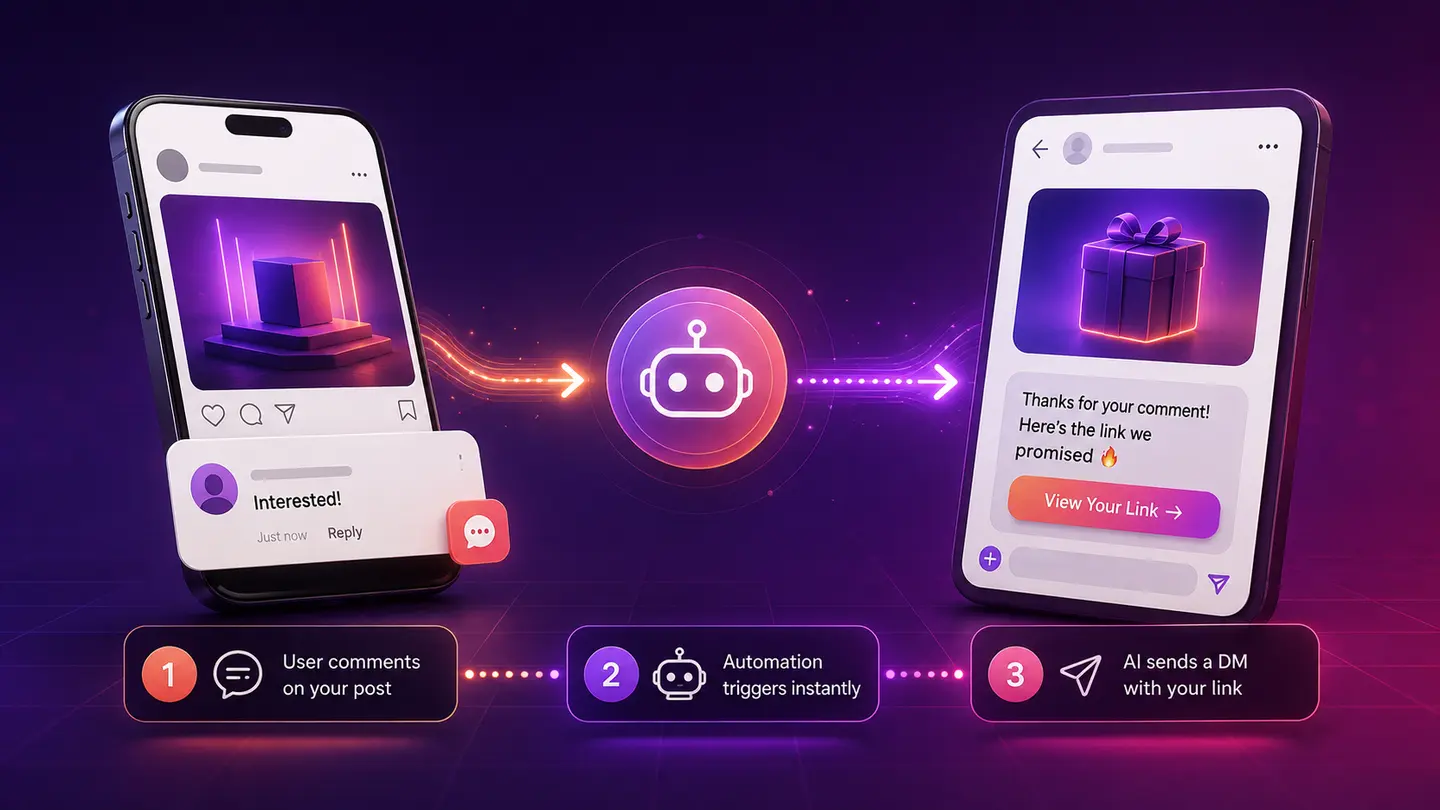
Start with the shortest understandable journey
If the caption clearly promises a resource and the final DM can deliver it directly within the configured supported flow, adding another confirmation may be unnecessary. Every extra decision gives the recipient another opportunity to stop or become confused.
An opening message can be useful when the next interaction needs an explicit continuation or a clearer explanation. It should tell the person what tapping the control does. It should not look like the resource has arrived when it is only the first step.
Use an honest continuation label
An example opening message is: You requested the camera checklist. Tap Send the checklist to continue. The label describes the immediate action and repeats the resource name. The final message can then contain the actual link button.
Avoid labels such as Download if the tap does not download anything. Similarly, do not use I agree unless there is a real, clearly explained agreement. A conversation control should not pretend to collect consent for an unrelated purpose.
- Opening text identifies the request.
- Continuation label describes the next action.
- Final DM delivers the promised resource.
- Optional conditions are disclosed before the request.
Inspect the sequence rather than each message alone
The opening DM, optional follow request, and final DM form one journey. Individually polite messages can still create a repetitive sequence when viewed together. Read the full thread in order and remove unnecessary repeated introductions.
Use AP3K's preview to inspect wording and real-account testing to verify delivery. A preview cannot prove that a continuation interaction was received by the platform or that the final message reached the intended account.
Measure where recipients stop
Distinguish an initial message from completion of the final delivery step. If people receive the first prompt but never continue, inspect clarity and friction before rewriting the resource itself. Use the activity actually available; do not infer button taps from sent-message totals.
Keep the first campaign simple enough that you can explain every step in one sentence. Complexity is justified only when it serves a clear need that you can test.
Topics