By AP3K · English guide
Measure the Instagram Comment-to-DM Funnel Without Inflating Results
A useful funnel tells you where a customer journey stops. It does not relabel every comment as a lead or every delivered message as a sale. Define each stage and its evidence before calculating percentages.
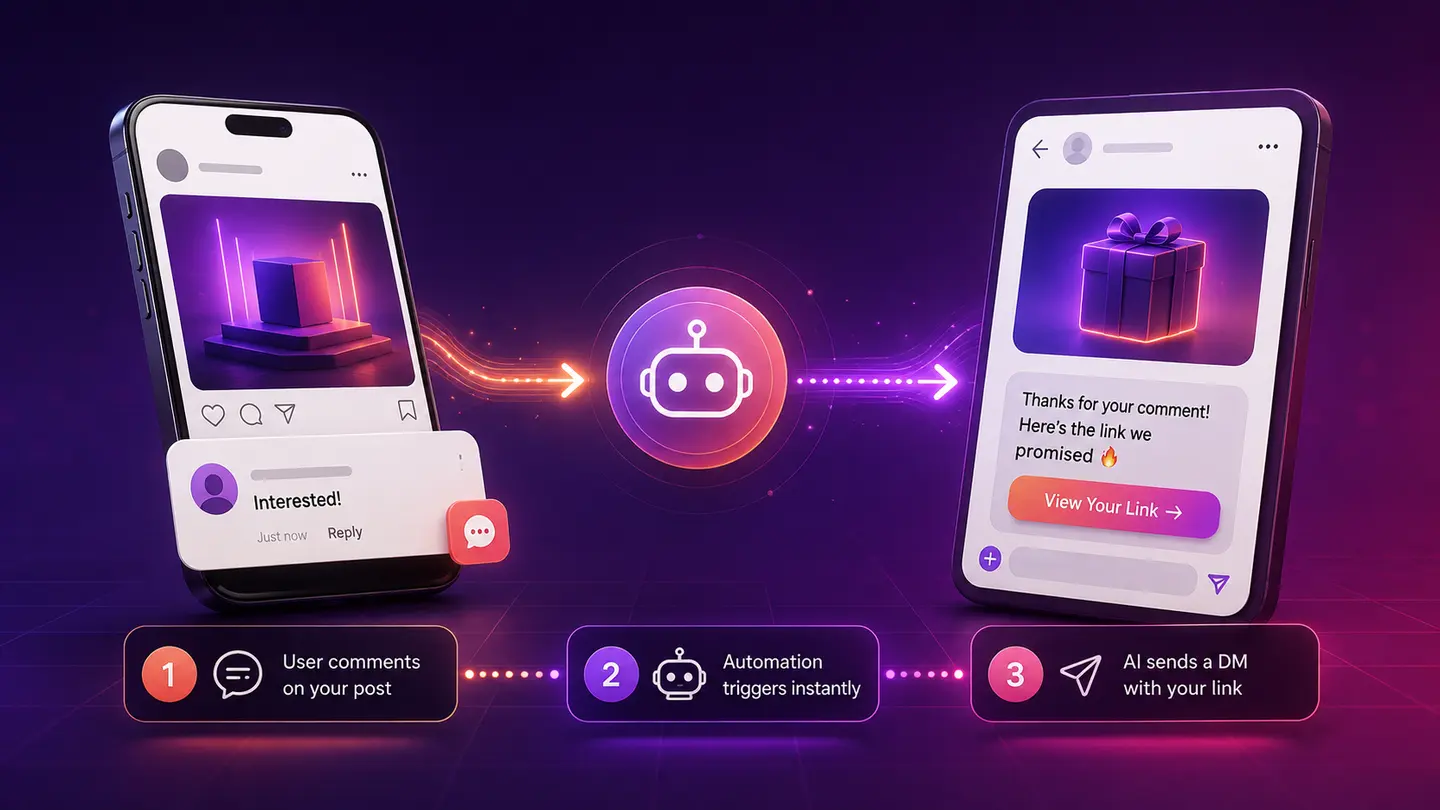
Name the stages and their data sources
Begin with eligible requests, then inspect the matching and action information available in AP3K. Use the receiving destination's analytics for visits and the booking, form, course, or store system for completed outcomes.
A captured contact indicates recorded interaction context. It is not automatically an email subscriber, qualified opportunity, or paying customer. Similarly, a reported sent message is not proof of an open or read. Keep those labels separate in the report.
Choose a consistent counting unit
Decide whether you are counting comments, campaign runs, actions, visits, or unique people. One person may comment twice, one run may include multiple actions, and one visitor may open the destination several times. Dividing incompatible counts produces a number that looks precise but is difficult to interpret.
Use the same date range and account context across systems. Allow for timing differences when a person requests the resource late in one period and completes the next step in another. Explain unresolved attribution rather than forcing every event into a single total.
Use a clearly labeled example to inspect the math
Hypothetical example: a campaign records 100 qualifying requests, 90 successful final-message actions, 36 attributed destination visits, and 9 completed form submissions. These are sample numbers, not AP3K customer results. They suggest questions at each transition, but do not prove why people stopped.
The 9 submissions divided by 36 attributed visits equal 25% for that defined visit-to-form comparison. Dividing by 100 requests answers a different question. State the denominator next to every rate, and do not describe either number as a universal benchmark.
Fix the stage supported by evidence
Missing final actions point toward configuration, eligibility, optional-step completion, or delivery investigation. Visits without submissions point toward the destination, offer, or form. Low request volume may involve audience fit or the public instruction.
Review customer questions and errors alongside the counts. A working technical sequence can still be confusing, and an attractive percentage can hide a very small sample. Use the report to choose the next observable improvement rather than to manufacture a success story.
Topics